




CAD for industry

Immersive Engineering with NX CAD

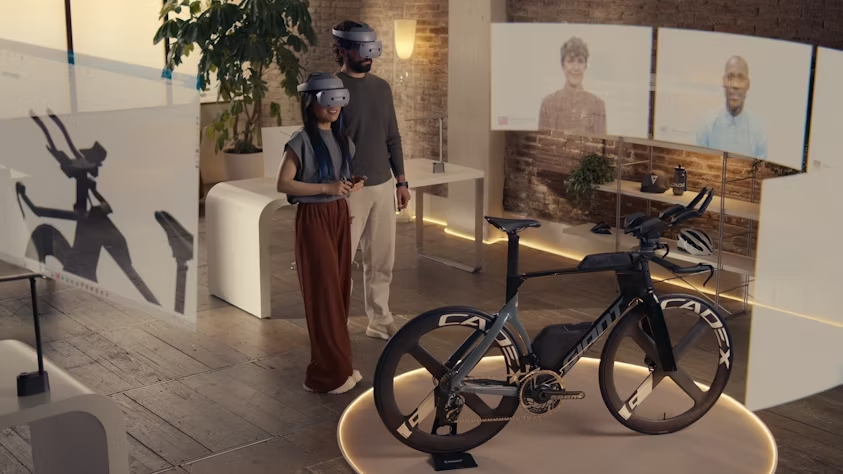
Elevate your CAD experience with NX CAD’s cutting-edge immersive engineering technologies. These tools allow you to visualize, simulate, interact with, and manipulate designs in a virtual environment, fostering enhanced collaboration with teams and customers.

What is Immersive Engineering?

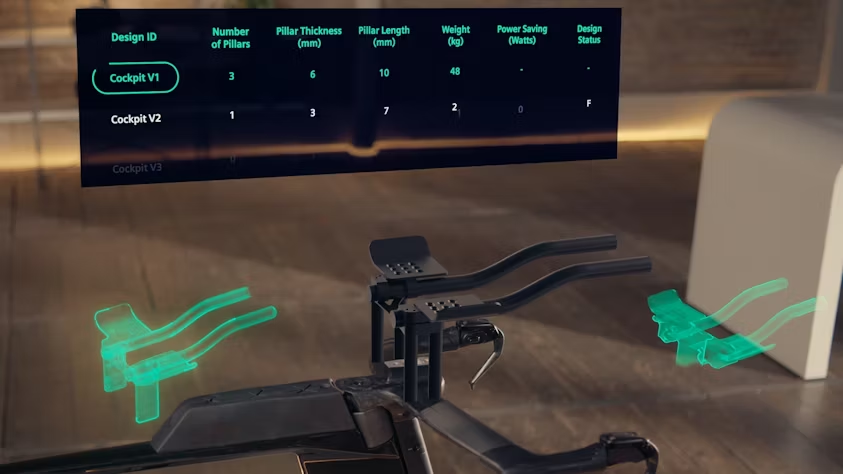
Enhance understanding and collaboration by visualizing, simulating, and interacting with designs in a virtual environment through Immersive Engineering. This approach leverages extended reality (XR) technologies such as augmented reality (AR), virtual reality (VR), and mixed reality (MR) to transform engineering practices. Applications include virtual prototyping, immersive training simulations, AR overlays for maintenance and repair, and VR-based immersive design in CAD workflows using VR hardware like headsets and controllers.Immersive Engineering takes design beyond traditional 2D methods, creating a fully integrated, user-centered virtual space that blends the real and digital worlds. This next-generation approach offers precise 3D interactions, stunning visual quality, and smooth virtual collaboration across the Siemens Xcelerator portfolio, propelling you into the future of design.
Hardware used with Immersive Engineering technologies
  • Headsets and Displays: Essential for creating immersive experiences, XR headsets fully immerse users in a digital environment.
  • Haptic Devices: Specialized hardware that delivers tactile feedback, such as vibrations or resistance, to simulate touch in a virtual environment. These devices enhance realism and user engagement in VR systems.
  • Tracking Sensors: In VR and AR setups, tracking systems—like external cameras or sensors—capture the user’s movements in real-time, enabling precise interaction with the virtual or augmented world.
Software used with Immersive Engineering technologies 
  • 3D Modeling and Simulation Software: Enables the creation of intricate virtual environments, products, and systems.
  • Development Platforms: Software development kits (SDKs) and tools that help developers build immersive applications.
  • Rendering Engines: Specialized software designed to render highly detailed, realistic virtual environments in real-time.
  • Interaction and Control Systems: Software that interprets input from hardware—such as hand controllers, haptic devices, or eye trackers—and translates it into actions within the virtual or augmented space.

Immersive Engineering when integrated with CAD

Boost creativity, enhance accuracy, foster collaboration, and streamline development cycles by integrating immersive technology with CAD and product design workflows. This fusion allows designers, engineers, and manufacturers to interact with 3D models or digital twins in a more intuitive and lifelike way, transforming the design process.

Benefits of immersive CAD software

Combining immersive technologies, such as VR, AR and MR with CAD software provides game-changing transformative benefits.
Discover some key advantages:
  • Spatial Context: Visualize CAD models in a life-sized, real-world setting, providing a clearer sense of scale and proportion.
  • Detailed Views: Explore models from multiple angles, zoom in on intricate details, and even “navigate” around the virtual model, enabling more precise design adjustments and a deeper understanding of engineering needs.
  • Team Collaboration:
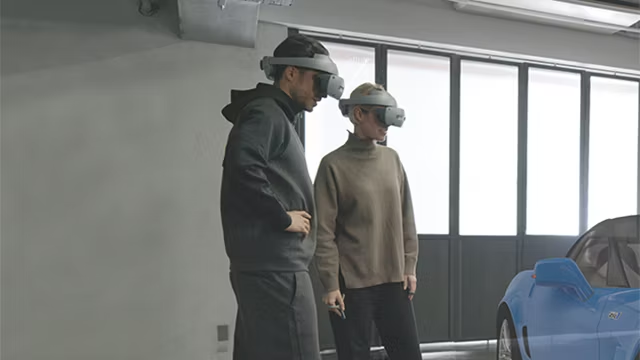
    Collaborate in virtual environments, interact with CAD models in real-time, and conduct design reviews for validation—no matter where your team is located.
  • Client Engagement: Use immersive experiences to help stakeholders, who may not be familiar with technical drawings, better understand design models, making it easier to gather valuable client feedback before moving on to physical prototyping.
  • Rapid Testing and Feedback:  Accelerate the feedback loop by quickly testing design concepts and configurations for validation through virtual prototyping using VR and AR.
  • Reduced Need for Physical Prototypes:  Evaluate ergonomic fit, assembly feasibility, and spatial awareness in immersive CAD environments, eliminating the need for costly physical prototypes—saving time, reducing costs, and supporting sustainable design practices.
  • Safe Simulation Environments:  Train and simulate in realistic virtual environments without real-world risks, thanks to VR and AR integration. This is particularly valuable for industries with stringent safety protocols, such as aerospace, automotive, and manufacturing.
  • Precision in Execution: Catch design issues early—like collisions, clearance problems, or functional misalignments—using immersive CAD technologies.
  • Fewer Errors: Identify and address errors before physical prototyping or production with immersive previews and walk-throughs, reducing costly rework and enhancing confidence in the final design’s accuracy.
  • Innovation and Differentiation: Stand out by utilizing immersive CAD solutions to deliver advanced visualizations and experiences that attract clients and stakeholders seeking high-tech solutions.
  • Faster Time-to-Market: Accelerate project timelines with quicker prototyping and approval processes, giving you a significant competitive edge when working under tight deadlines.

CAD to VR

With just one click, switch to VR mode and instantly immerse yourself in your 3D models within a virtual reality environment.
NX seamlessly bridges the gap between CAD and VR, streamlining the integration process and eliminating the need for CAD
data preparation or export.

NX Immersive Designer

Siemens NX CAD is recognized as a leading 3D mechanical design solution, thanks to its advanced modeling capabilities, seamless handling of large assemblies, and fully integrated CAD/CAM/CAE environment. With strong PLM integration, AI-driven tools like generative design, support for digital twins, and broad customization options, NX CAD delivers the adaptability needed across diverse industries. Its scalability, ongoing innovation, and robust support network make it a top choice for companies aiming to thrive in complex, competitive engineering environments.

Learn more about NX Immersive Designer
NX Immersive Designer features

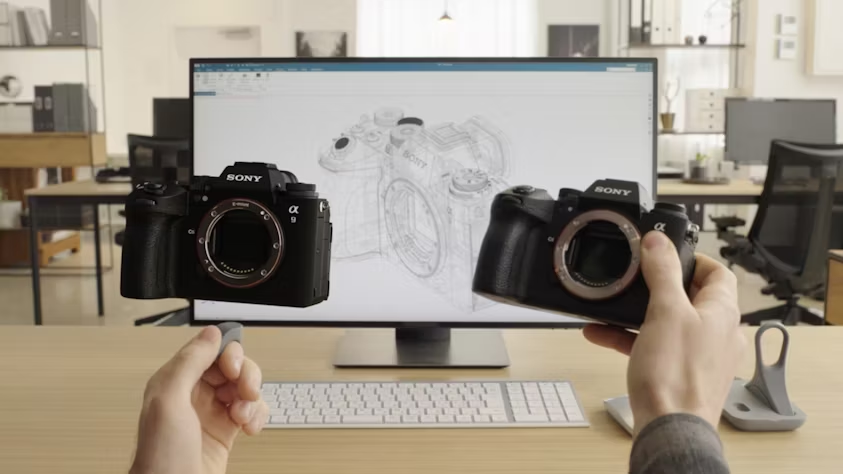
Create tomorrow’s innovations as you stand in the same space as your digital twin visualizing the entire process chain in a singular immersive environment before production begins.

Precision Product Creation

Experience the full capabilities of NX in a high-fidelity 3D space, supporting both traditional mouse and keyboard inputs. Design in-context on an infinite, fully immersive canvas where the digital and physical worlds seamlessly blend.

High-Fidelity Product Ideation

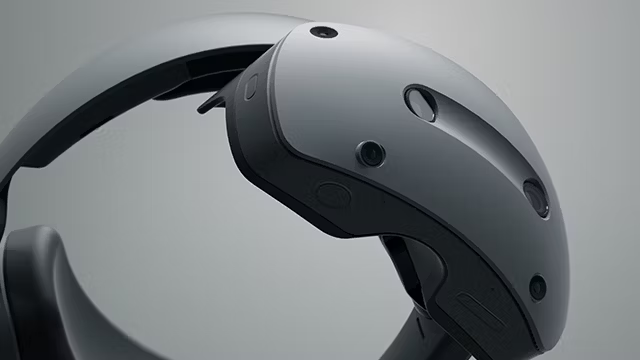
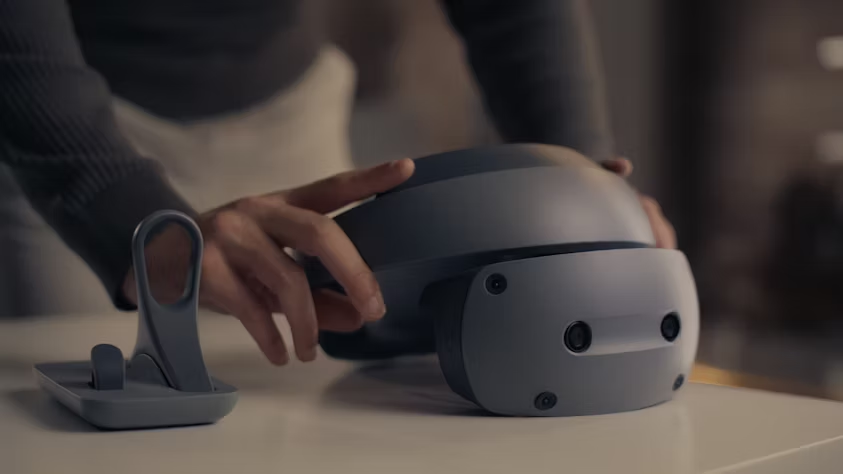
Get an unmatched view of your designs through the Sony HMD, featuring 4K OLED microdisplays for each eye. Immerse yourself in the experience and interact with your models using NX-optimized hand controllers for precise editing and adjustments.

Optimized Work Environment for Design

Work longer in comfort with the lightweight Sony HMD, featuring balanced front-to-back weight distribution and cushioned forehead support. A flip-up visor makes multitasking easier and ensures a borderless experience.

Global Collaboration for Product Design

Collaborate effortlessly with teams anywhere in the world while engaging with full-scale, high-fidelity designs. NX Immersive Designer blends the real and digital worlds, and, integrated with the Siemens Xcelerator platform, offers cloud-enabled, scalable solutions that adapt to industries like automotive, aerospace, and more.

The Siemens & Sony Partnership

Siemens and Sony have teamed up to bring you NX Immersive Designer, revolutionizing immersive engineering. The Sony XR head-mounted display plays a crucial role in this integrated solution, combining Siemens’ industry-leading NX software with Sony’s cutting-edge visualization technology. This collaboration delivers unparalleled immersive design and collaborative product engineering, offering your teams the most intuitive and precise ways to interact with digital twins. With stunning visual fidelity and precise control, you can collaborate more, engineer smarter, and innovate faster.

NX Immersive Explorer

Visualize your designs in stunning high fidelity, whether on your desktop or in virtual reality, with NX Immersive Explorer-our latest evolution in immersive visualization and design review technology. NX Immersive Explorer is compatible with most major head-mounted display (HMD) devices, offering versatile and high-quality viewing options.

Learn more about NX Immersive Explorer
View design changes in virtual reality
Launch NX Immersive Explorer directly from your standard NX or NX X workspace. With intuitive controls, it’s designed for easy use—no specialized training or VR experience required.

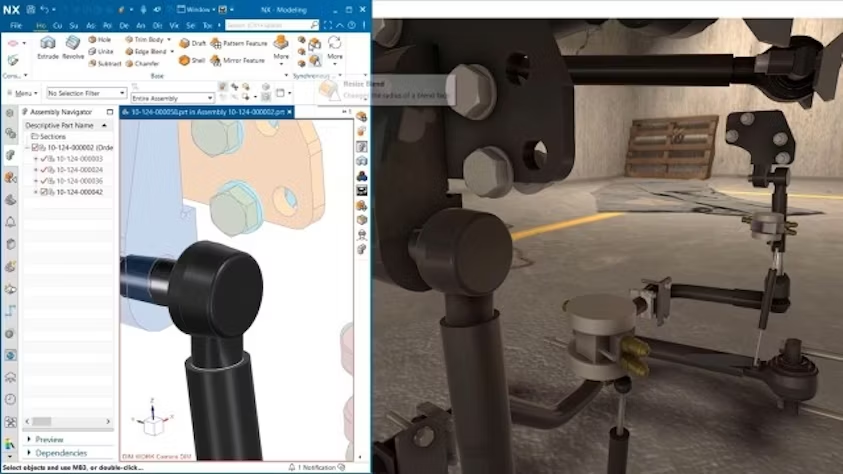
Make real-time modeling or assembly configuration changes in NX and instantly see the updates reflected in the immersive environment.

Within NX Immersive Explorer, you can access the Assembly Navigator to control the visibility of parts, enhancing your ability to interact with designs in a fully immersive space.

Visualize mechatronics animations in high fidelity
Experience precise simulations of your designs in motion, powered by data from NX Mechatronics Concept Designer—an essential tool for validating mechatronics designs. This NX add-on module enables advanced modeling, simulation, and validation of machine designs, incorporating multibody physics and automation-related behaviors.

Enhance communication with innovative design review features like in-environment annotations, sticky notes, and snapshots, allowing users to easily return to a saved state or specific configuration of the visualization.

NX Immersive Explorer is available exclusively through NX Value-Based Licensing.

Token-licensing

What is NX Value Based Licensing?

Elevate your NX or NX X experience with Value-Based Licensing (token licensing)—a flexible, scalable, and cost-efficient approach to accessing a broad range of advanced and specialized capabilities.

With this model, you receive a pool of tokens that can be allocated across teams to access the NX modules they need. The number of tokens in the pool dictates how many modules can be used simultaneously, with the option to easily add more tokens as your business requirements evolve.

Learn more about Value Based Licensing

Immersive Engineering by industry

Explore how Immersive Engineering is revolutionizing industries across the board. These technologies are being embraced in diverse sectors for applications such as training, product design, marketing, customer experience, and more.

Immersive CAD technologies, including augmented reality (AR), virtual reality (VR), and mixed reality (MR),
are transforming the aerospace industry’s design, engineering, and manufacturing processes in powerful ways.
One key application is in customer and stakeholder demonstrations, where these technologies provide interactive
validation experiences. This allows teams to explore aircraft interiors, cockpits, and other design elements before
physical prototypes are created. The ability to gather instant feedback and make customer-driven adjustments early
in the design process is invaluable, helping to optimize both design and production.

Learn more about CAD for aerospace

Immersive CAD technology offers significant advantages to the building information modeling (BIM) industry by enhancing design, collaboration and visualization processes. Using VR and AR, architects can simulate construction sequences, helping teams identify and address logistical challenges and safety risks before actual construction begins. This allows for improved planning, more efficient scheduling and a safer construction environment.

Learn more about CAD for architecture & BIM

Integrating immersive CAD technology into the automotive industry boosts design efficiency, accelerates time-to-market, enhances quality, and improves customer experiences, all while driving innovation and sustainability. Using VR and AR, immersive CAD can simulate real-world conditions like aerodynamics, crash scenarios, and environmental impacts on virtual models. This technology also allows engineering teams to test durability, safety, and performance early in the design phase, empowering manufacturers to make data-driven decisions about materials and design features.

Learn more about CAD for automotive

In the consumer products and goods sector, immersive CAD enhances design, testing, and collaboration across industries—from sporting goods to food and beverage. This technology accelerates time-to-market, reduces costs, and improves product quality.

For ergonomic assessments, immersive CAD allows designers to evaluate product fit and comfort, which is essential for wearable products like headphones or VR headsets. It also enables designers of ergonomic furniture, such as office chairs, to test posture support and adjust dimensions based on virtual human models, ensuring optimal comfort and functionality.

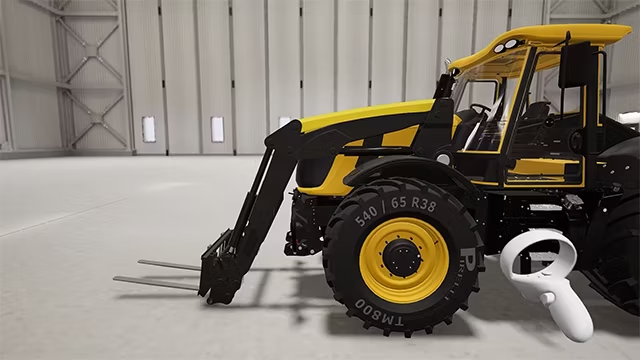
In the industrial machinery sector, immersive CAD offers significant benefits across design, manufacturing,
maintenance, and training. It enables rapid design iteration and testing by allowing you to quickly modify
machinery dimensions, control placements, and other features in a virtual environment. This helps minimize
the need for costly and time-consuming physical prototypes, streamlining the design process and accelerating time-to-market.

Immersive CAD offers substantial benefits to the marine industry, particularly in shipbuilding, offshore platform design, maintenance, and training. For example, you can simulate vessel hydrodynamics, testing how a ship interacts with water, wind, and other environmental factors. This helps optimize hull designs for better fuel efficiency, stability, and speed. By reducing the need for costly physical testing in water tanks or wind tunnels, immersive CAD saves time, cuts costs, and supports more sustainable design practices.

Learn more about CAD for marine

Immersive CAD delivers powerful advantages to both the medical device and pharmaceutical industries, revolutionizing how devices are designed, tested, manufactured, and maintained. In medical device development—whether for surgical tools or diagnostic equipment—you can design and prototype in full-scale 3D VR, allowing teams to refine designs, test user interfaces, and evaluate ergonomics more effectively. This ensures that devices are intuitive and accessible for healthcare providers.

In pharmaceutical research and drug development, immersive VR enables scientists to visualize complex molecular structures, providing deeper insights into drug interactions at the molecular level. This capability enhances drug compound design and accelerates the discovery process, driving faster innovation in the field.

Learn more about CAD for medical devices

Case Study

Natilus

Case Study

Reducing the cost of airfreight with innovative designs

Company: Natilus

Industry: Aerospace & defense

Location: San Diego, California, United States

Siemens Software: NX, SES (formerly Vistagy), Simcenter 3D Solutions, Teamcenter

Immersive Engineering